- The Don Dispatch
- Posts
- Where is my Party?
Where is my Party?
Reflections as I try to understand which leaders, if any, still represent my beliefs.

Robert Weigel
November 02, 2025
I’m out in Los Angeles with my friend Ali, as we work to better understand immigration in the U.S.
Yesterday we participated in an anti-I.C.E. protest.
Before that, we:
Searched one of Texas’ busiest migrant corridors for missing and presumed dead immigrant. (Image 1)
Visited three different border sections along the Texas–Mexico line. (Image 2)
Stood at the final resting place of a 19-year-old who died chasing a better life in the U.S. (Image 3)
Celebrated Día de los Muertos in San Antonio.
Met with dozens of law enforcement and customs officials. (Image 4)
Each place offered a different truth. None fit neatly into the story I’d been told. And that’s when the real questioning began, not of others, but of myself, and how quickly I’d accepted the simplicity of a narrative that comforted me.
In nearly every encounter, I found contradictions to the stories told by national media and repeated by those who believed them. The two most prevailing:
That most who cross our southern border are criminals.
Those who are getting deported are majority good people
Neither are true in absolute. On the border, most migrants are poor, desperate for a better life. At an anti-I.C.E. protest, I saw vigils for those who died in detention — painted as saints. But after looking up three of their names, I found charges: drug trafficking, domestic abuse, assaulting a police officer. (Names and Images below: 5 - 7)
Reality resists simplification.
This week we will be in Tijuana, Mexico to visit what is colloquially known as a “Deportee Slum.”
There I will interview Vicente Calderon, founder and editor in chief of The Tijuana Press. Ali will also be speaking with immigrants who have been deported from the U.S. and who now live there.
My understanding of this issue has gotten muddier the more I’ve looked into it.
The deeper I go, the less certain I become. It’s the Dunning-Kruger effect in real time: the less you know, the more confident you feel. I’m somewhere near the bottom of that curve, finally humbled by how much I don’t know.
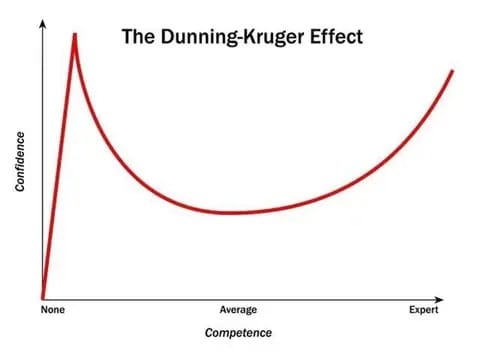
For context: I lived three years in Central America, became fluent in Spanish, and was even accepted into a master’s program on this subject- but turned it down. I had a feeling the real world would teach me more than academia ever could
Take a look at this, my dear reader, and truly ask yourself where you sit.
How confident are you in your beliefs based on the information you’ve absorbed from your home, far away from this issue?
Do you think there is any slight chance that you’re being fed something by a greater power that has an ulterior motive?
Do you think that, maybe— just maybe —there might be an incentive to make you angry and fearful of the other?
Your side: good.
The other side:
Criminals
Fascists
Communists
Racists
When you start believing your side owns the truth, you’ve already lost sight of it. The nineteenth-century French thinker Ernest Renan wrote:
“logic excludes, by definition, nuances — and since truth resides exclusively in the nuances, logic is a useless instrument for finding Truth in the moral and political sciences.”
The less we know, the more rigid we become. Rigidity kills nuance. And without nuance, truth itself disappears.
Here is the nuance I’ve observed:
A country benefits from the free flow of immigration (particularly the cheap labor kind in the U.S.), and a country equally benefits from having boundaries that are enforced by robust due process made flexible by individuals who exercise the law.
That seems to be the main topic of discussion, and the only way we can get there is if we see the hypocrisy in our own arguments, so that a discussion between both (or multiple) viewpoints can be had.
This is my advice:
Resist, with all your might, the fear being fed into your eyes through the 24/7 news cycle.
Seek to understand, not with the assumption that you’re right, but with the hope that the other might reveal what you’ve been missing.
This doesn’t just apply to immigration, but to every complex issue that draws your attention.
Take care, Don’s & Donette’s.
(P.S. This is a heavy subject- it weighed on me pretty hard yesterday. Despite it’s weight, it is worth discussing, but don’t forget to invite playfulness and fun into your days, even in the face of despair or stress.)
Images:

(Image 1.) Ali with Deputy Don White, as we searched for the remains of a missing immigrant in Brooks County, Texas
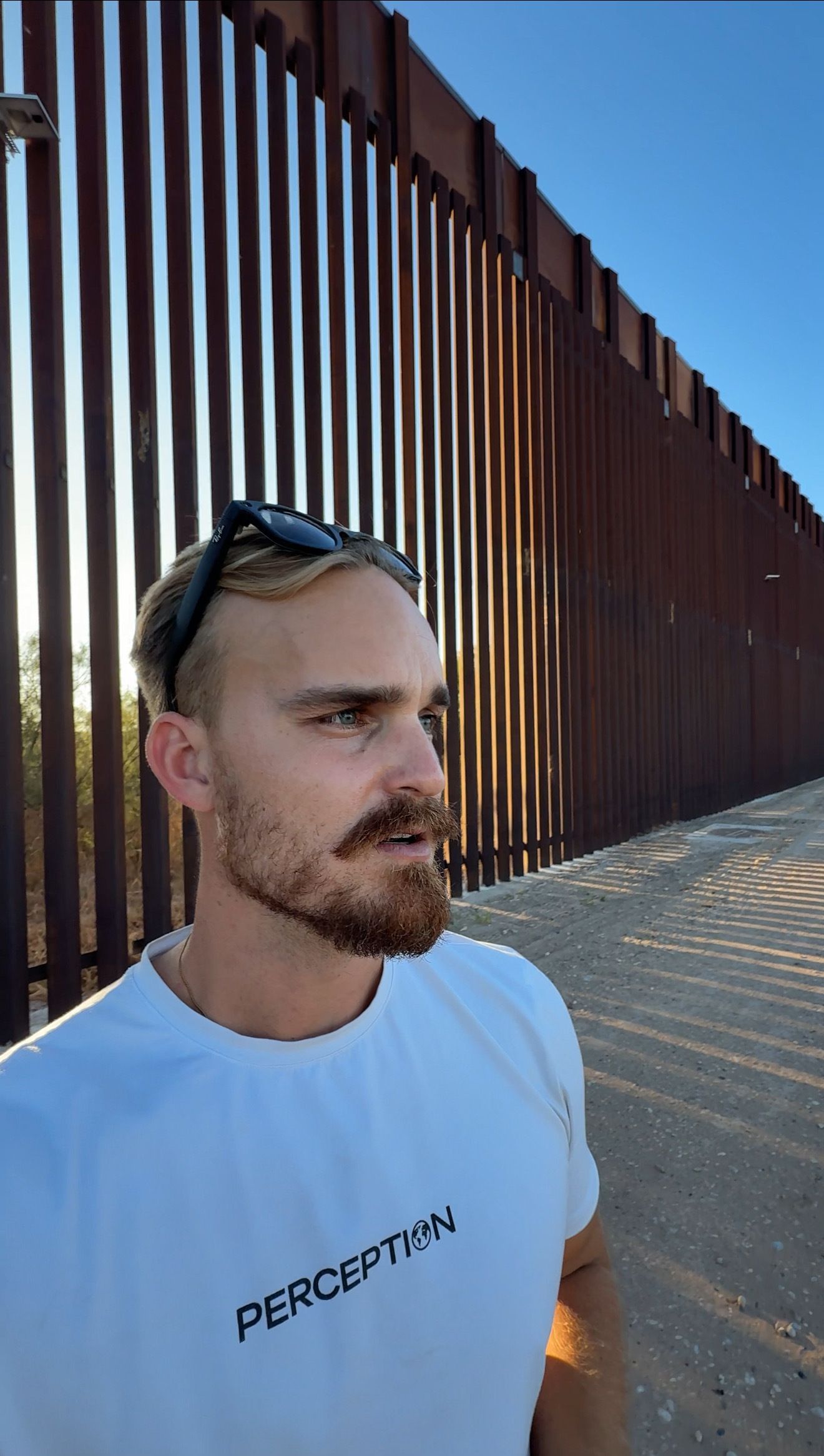
The border wall near Eagle Pass, Texas. (This was on private land as is most of the border wall- I convinced the ranch owner to let us onto the property to film.)

This is where, Irineo, a 19 year old man passed away likely due to a heart attack as he was trying to make his way into the U.S. The mountains you see in the distance are in Mexico and behind us is the U.S. It’s about a 3 days walk in either direction to reach the nearest point of civilisation. We built this cross for Irineo and left his hat there. I was unable to hold back my emotions here and wept over his grave as Sheriff Cleveland, Ali, and myself said a prayer to honor him.
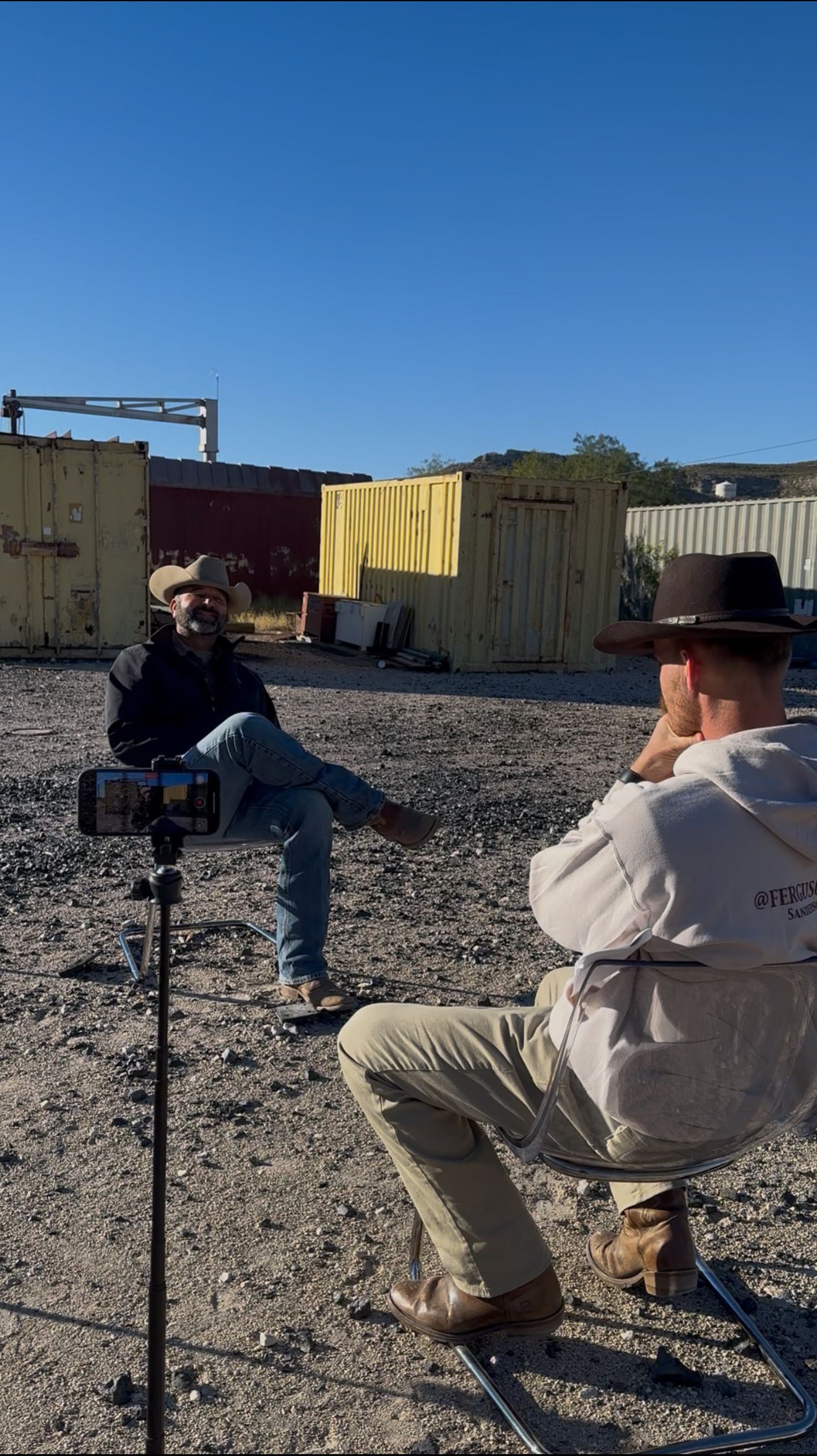
My sit down interview with Sheriff Thaddeus Cleveland which I will release this month in coordination with my work with Ali
Images of the vigils at the I.C.E. protest yesterday:

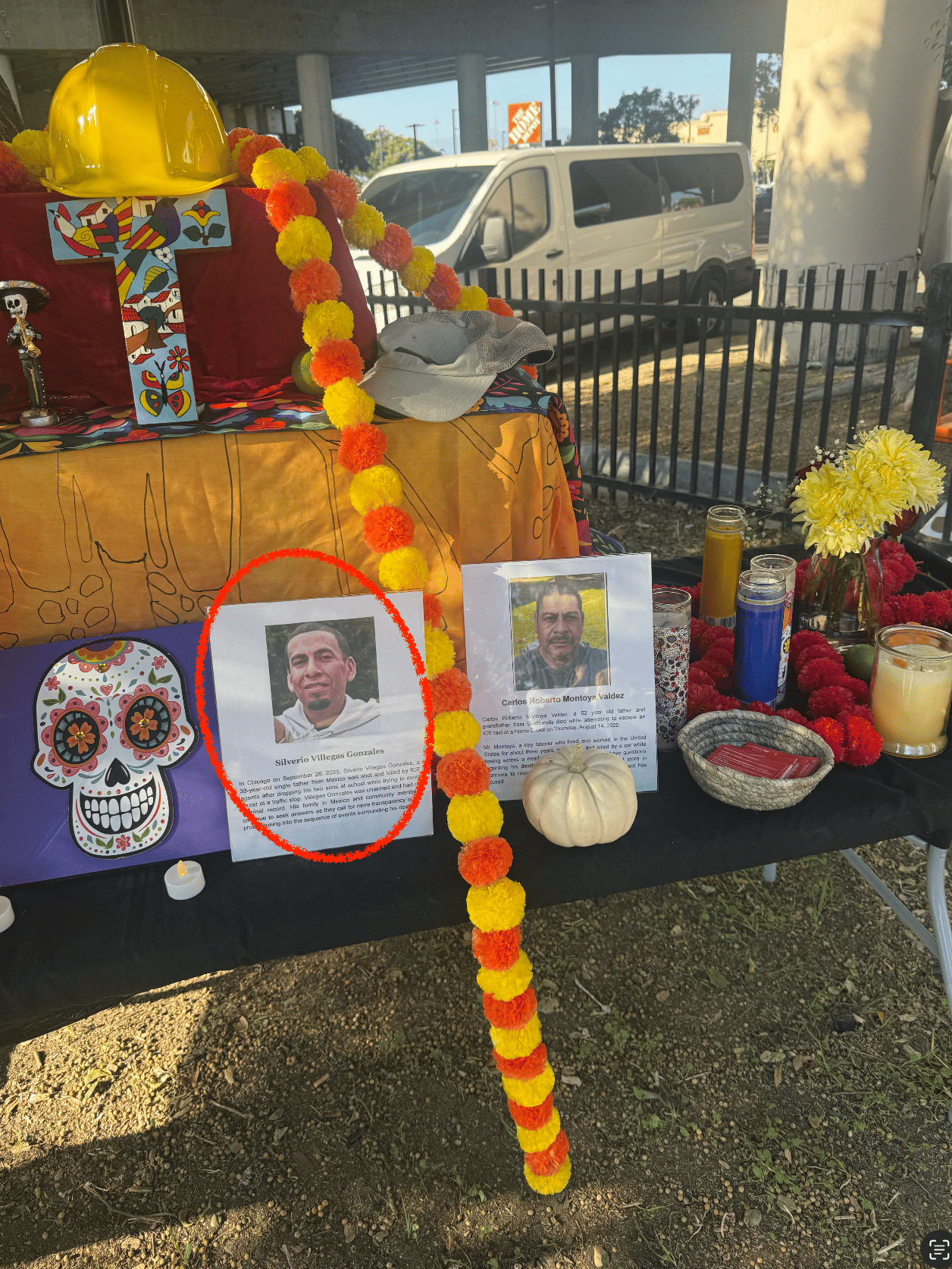

This is my attempt to express my thoughts on the broader hypocrisy that I’m seeing from the U.S. My biggest bone to pick has been coming from the Democratic party that often speaks about destroying America and how the U.S. is one of the worst places on earth. I have always been a Democrat but have been distancing myself from that party due to how they perceive and speak about the very country that enables their own freedom of expression.